


 25 / 36

spring / summer 2017 |
aspects of land
|
25
HOW TO PASS ON
WEALTH SUCCESSFULLY
n
Establish trust and open
communication throughout the family.
n
Identify a family mission and a
strategy to attain it.
n
Prepare heirs for the responsibilities
of wealth, even from a young age.
n
Maintain an honest assessment of
family assets, including individuals’
strengths and talents.
n
Draw up a family constitution to
ensure all stakeholders have a clear
understanding of expectations and
prospects.
n
Ensure that the will reflects the
constitution, thus avoiding surprises
and grounds for dissent.
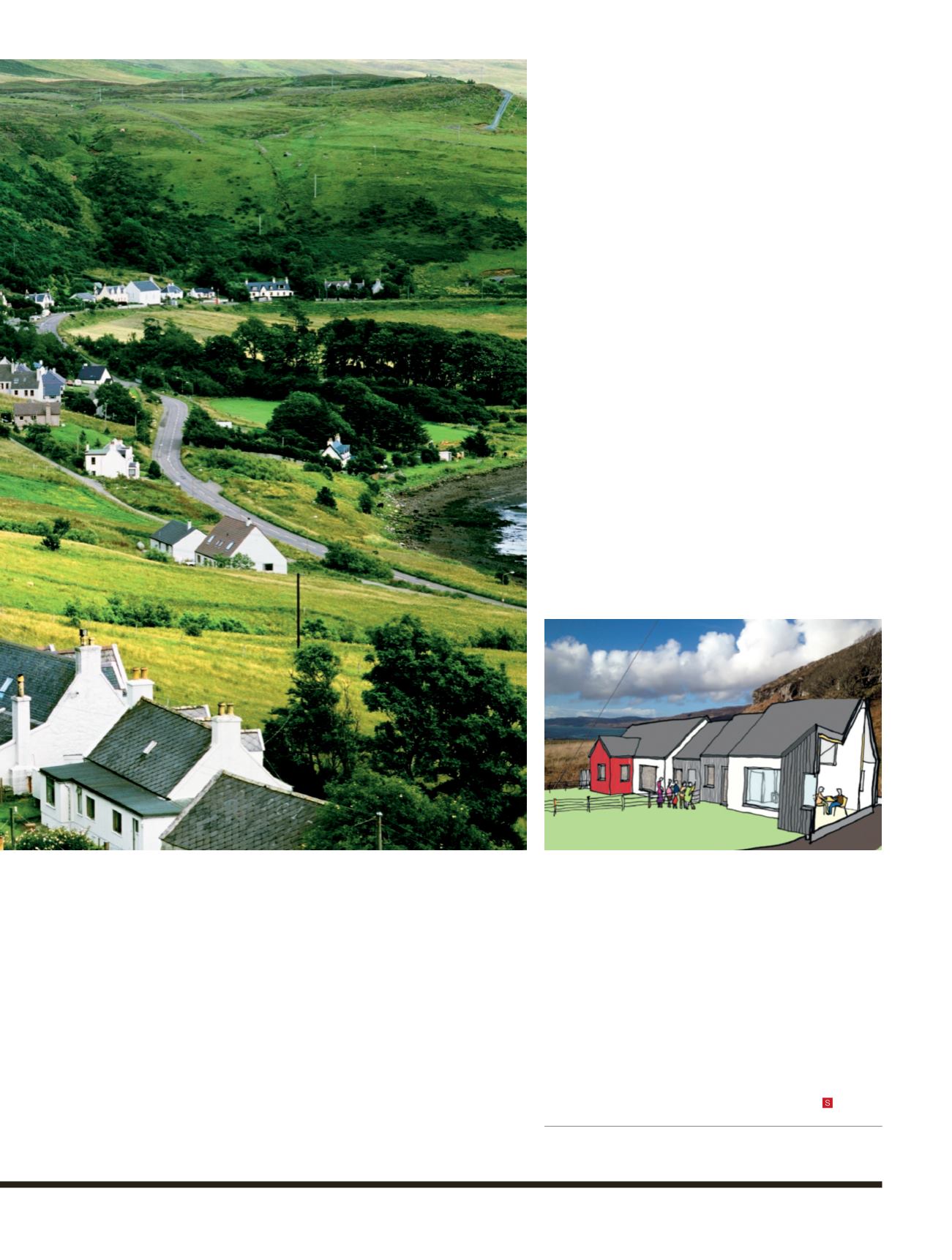
ABOVE Rural
Scotland
needs more
affordable housing
CASE STUDY
ULVA FERRY, MULL
The Ulva Ferry development
on the island of Mull began
in 2010, when the primary
school was threatened
with closure. A lack of
affordable housing in the
area was making it difficult
for families with school-age
children to stay on
the island.
The Ulva School
Community Association
(USCA) and Mull and Iona
Community Trust (MICT)
with the support of the local
community successfully
purchased land to build two
family homes.
The project was
financed by grants from
Argyll & Bute Council, the
Quaker Housing Trust,
the Trusthouse Charitable
foundation and USCA, as
well as more than £20,000 in
local donations and a grant
of £27,000 from the RHF –
the first to be awarded after
its launch in 2016.
The Ulva Ferry Team
was supported by Jodi
MacLeod of RHS’s Our
Island Home. “Island-based
developments have extra
challenges,” says Jodi.
“These include delivering
materials by ferry, as
well as archeological
and conservation
considerations, which all
add to the time and costs.”
The building contract
was awarded to local
firm, Norman MacDonald
Builders. The two three-
bedroom houses will be
completed this spring
and an application and
allocation process is
currently underway for
prospective tenants for
the houses.
And while knowledge of how to build affordable
housing is growing among community landowners, it
does take time to build up experience.
“Many people are put off by the challenges of building
in the countryside,” says Debbie. “But help is available
and both RHS and Savills want to support rural
communities in Scotland to build much needed housing.”
There are many parts to the development process: from
finding a site, to making grant applications, to assessing
existing services and access, to finding architects and
building surveyors. “We are keen to help make the process
of building affordable homes much simpler for community
and private landowners and other self-builders.”
n
Debbie Mackay, Edinburgh, 0131 344 0891,
dmackay@savills.comBELOW Designs for two
community-built houses
on the Isle of Mull
“COMPARED TO
URBAN AREAS,
RURAL SCOTLAND
HAS FEWER FLATS,
MORE EMPTY
PROPERTIES
AND A HIGHER
PREVALENCE OF
SECOND-HOME
OWNERSHIP”
be more realistic and apply greater sensitivity to rural
planning applications.”
Derek Logie, chief executive of RHS, agrees. “We have
been battling these issues for a long time because they all
prevent communities from getting housing developments
off the ground,” he says.
He believes the RHF is a good start and he hopes it
will help drive progress. RHS has worked with around
100 community organisations since 2000, some of which
have resulted in affordable housing developments. But it
does take time, as the Ulva Ferry development in Mull
demonstrates (see above right).
Derek’s incentive to continue lobbying is seeing the end
result. “When houses are built and we get to see families
move out of poor quality housing or even caravans, it is
very satisfying to know that we have helped,” he says.