


 20 / 36

20
|
aspects of land
| spring / summer 2017
RENOVATIONS
BACK
TO LIFE
Neglected period buildings
have centuries of in-built
charm.Tackled the right
way, they can both be
brought back to life and
generate a healthy income
stream for their owners
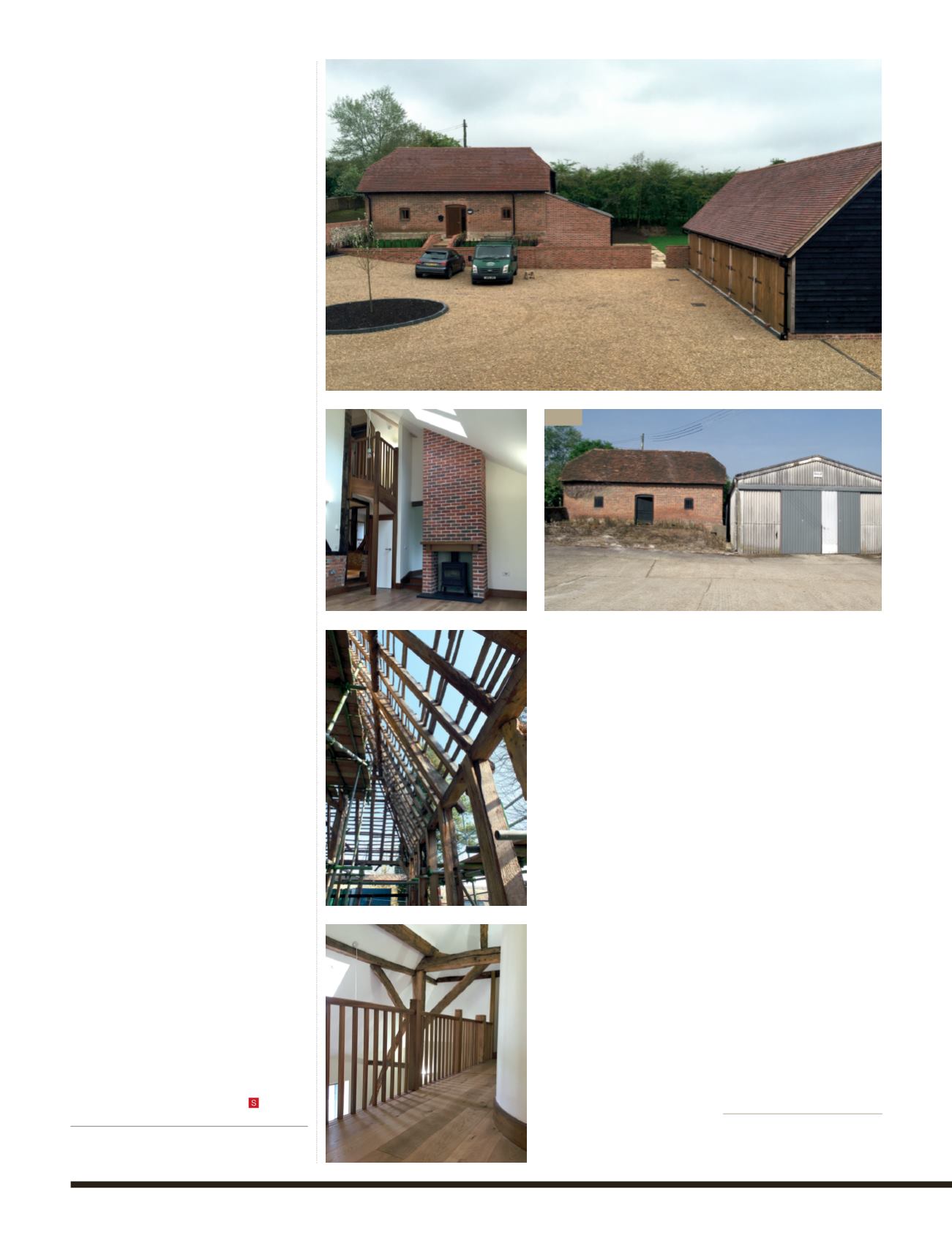
COOMBESBURY BARNS,
NEAR NEWBURY, BERKS
This former farmstead, set
in a pretty rural location just
to the west of Newbury, was
made up of a small stable
building, a Grade II listed
timber-framed barn and a
modern farm building – all
of which lay pretty much
redundant. When the owners
decided to gain planning
permission to convert the
buildings into four, three-
bedroom properties to let,
they originally used another
firm of consultants before
changing mid-project and
asking Savills to come
on board.
“We started off by
reviewing the designs,
which had already been
given planning and
listed building consent,”
explains David Shaw. “We
re-arranged the layouts
and rethought some of the
spaces to work better and
take more advantage of
the internal and external
views. We also retained
more of the original
features such as the timber
frames and cladding, and
managed to improve the
quality of the living spaces,
which is key both to
securing and maintaining
tenants and avoiding
void periods.”
The other strategies
introduced to the project
were about energy
consumption, which
according to David is
becoming “a major subject
in construction today”.
Through using natural
building technologies
for the insulation of the
buildings, a mechanical
ventilation heat recovery
(MVHR) system and
ensuring that the air
tightness of the building
was as meticulous as
possible, they managed
to secure an Energy
Performance Certificate
(EPC) rating of B for the
buildings, thereby reducing
the tenants’ running costs.
All four properties have
now been successfully let.
n
David Shaw, Winchester,
01962 857 409,
dwshaw@savills.comR
edeveloping a listed building is
notoriously challenging. Today’s
building regulations specify ever
stricter levels of environmental compliance
plus new laws regarding minimum space
standards for domestic buildings.The task
can seem overwhelmingly complicated.
However, owners of period buildings
have a responsibility to look after them
and if a change of use will help to
preserve an old building, as long as it’s
approached in the right way, it has every
chance of getting planning permission.
With the ever growing market for
characterful spaces for living or working
(as long as it’s updated to modern
standards), more owners are seeking to
explore the potential of the neglected old
buildings on their properties.
“We’re able to look at a building and
suggest a viable use for our clients,”
says David Shaw of Savills Rural
Architecture. “We enjoy nothing more
than breathing life back into these old
buildings and making the most of their
innate character.”
Renovation can be expensive,
particularly if you’re retrofitting systems
that comply with today’s energy
standards, but as David says, “the art
is to find the right strategy for the
building and, most importantly, achieve
the return on the investment.”
n
David Shaw, Winchester,
01962 857 409,
dwshaw@savills.comBEFORE