


 26 / 36

26
|
aspects of land
| spring / summer 2017
EXPERT OPINION
IS IT TIME TO
END SUBSIDIES?
The vote to leave Europe guarantees one significant thing
for farmers: an end to the Common Agricultural Policy.
But what will replace it, if anything? Should farmers continue
to receive subsidies and, if so, what for? Or, should the UK
move towards a New Zealand-style, subsidy-free system?
Industry experts and practising farmers give their views
iSTOCK
TALKING POINT
THE VOICE FOR
SHEEP FARMERS
PHIL STOCKER
Chief Executive, National
Sheep Association (NSA)
“The NSA believes
financial support is
essential and that the
government must
not reduce current
funding levels for
British agriculture. But
financial support has not
subsidised actual food
production for many
years now and the NSA
does not support a return
to traditional subsidies.
“Instead we would
like to see improvements
made to the current
system of farm
support, as there is
clear justification for
taxpayers’ money being
used to incentivise good
farming that delivers
good public services.
“Such a scheme
would only pay for
activity, therefore
supporting businesses
and individuals who
are taking a risk in
what is an increasingly
volatile market.This
should include landless
livestock keepers who
have historically been
excluded from support
structures in the past.
“The NSA suggests
the main pillars for
such a scheme should
be: capital investment
support and grant
funding to encourage
investment in efficiency
and agri-environmental
improvements; best
practice and efficiency
schemes; a public goods
reward scheme to fund
the delivery of benefits
not currently paid for
by the marketplace; and
enabling succession
planning so older
farmers can retire and
the next generation can
come through.
“The NSA is already
engaging with ministers
on how to deliver these
suggestions.”
THE NEW ZEALAND
ACADEMIC
STEVE WILKINS
Nuffield Scholar and farmer
in southern New Zealand
“Despite initial protests,
farm subsidies were
repealed in New Zealand
in 1984. Almost 30
different production
subsidies and export
incentives were ended.
“Did that cause a mass
exodus from agriculture
and an end to family
farms? Not at all. It did
create a tough transition
period, but just 1 per cent
of the country’s farmers
could not adjust and
were forced out, though
it was challenging for
many others.
“The vast majority of
New Zealand farmers
proved to be skilled
entrepreneurs – they
restructured their
operations, explored new
markets and returned to
profitability. Today, New
Zealand’s farming sector
is more dynamic than ever.
“Prior to the 1984
reforms, subsidies stifled
farm productivity by
distorting market signals
and blocking innovation.
Many farmers were
farming for the sake of
the subsidies.
“When the subsidies
were removed, it turned
out to be a catalyst
for productivity gains.
New Zealand farmers
cut costs, diversified
their land use, sought
non-farm income and
developed new products.
Farmers became focused
on activities that made
good business sense,
driven by the demands of
consumers, not by efforts
to maximise the receipt
of subsidies.
“More efficient
agricultural production
has also spurred
better environmental
management. Cutting
farm subsidies has
reduced the previous
overuse of fertiliser
and broadened farm
operations to encompass
activities such as rural
tourism that bring
management of the rural
environment to the fore.”
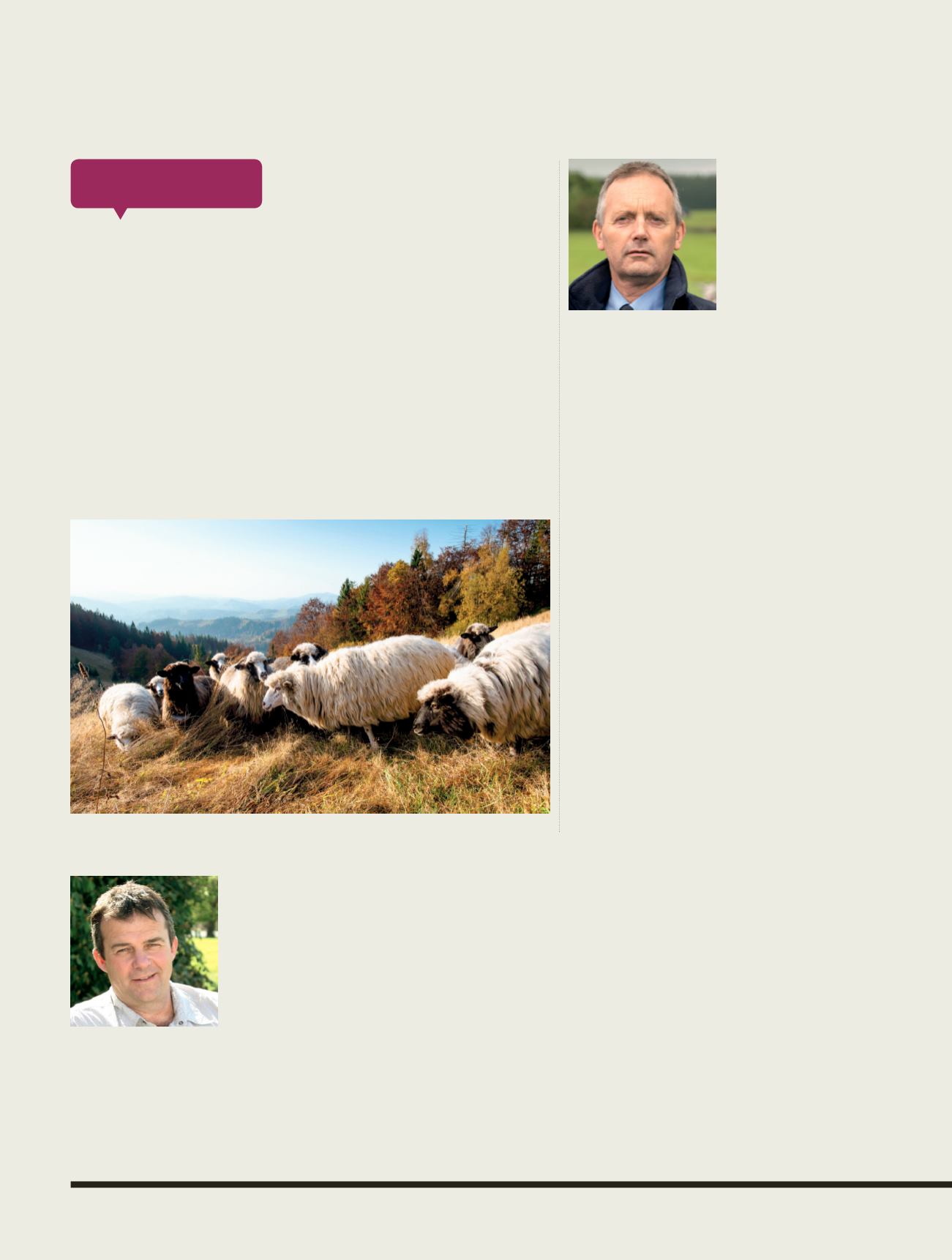
Sheep farming in the UK relies on subsidies for its profits, particularly in upland areas