


 31 / 36

spring / summer 2017 |
aspects of land
|
31
n
GROUND SOURCE HEATING
Using pipes buried underground,
ground source heat systems
extract heat from the earth and
pump it through heating and hot
water systems.
Systems can be costly and difficult
to install, but they are cheaper to run
than oil and gas boilers, can be used
to provide cool air in the summer, and
have a long life span.
n
DISTRICT HEATING SYSTEMS
District heating systems involve a
single, efficient boiler that can provide
heating and hot water for multiple
buildings or an entire community.
Technically complex and expensive
to install, they have not been hugely
popular in the UK yet. However, they
could be energy efficient for estates
with fuel sources.
“The boilers use sustainable fuel
sources such as wood chips, which
might be available on some estates,”
says Sophie Barrett. “However, you
need to bear in mind that woodlands
and boilers will need estate staff to
manage them, and then factor those
costs in to your planning.”
“Families these days want more open plan living
with larger living spaces. And as it is expected that even
more people will work from home in the future, having
appropriate home-office space needs to be factored in to
development plans.”
Some estate owners are thinking about the changing
needs of existing tenants and are looking at developing
alternative properties to free up existing stock.
One estate, for example, has sold land for a care home
to be built, but it will retain ownership of a few units
in the care home when it is complete.That way it has
appropriate accommodation for older tenants.
“In future I think more estates will have to think about
their residential portfolio in a broader market context,”
says David. “Savills is embarking on research to help
estates better align their mix of residential units with the
prevailing market demand in their area.
“Increasingly landlords need to find a balance between
their social role of providing housing that is affordable for
the area, with what is financially sustainable for the estate
in the long term.These requirements mean that they are
having to address the issue more directly.”
n
Sophie Barrett, Oxford, 01865 269 162, sabarrett@
savills.comn
David Wasserberg, London, 020 7877 4553,
dwasserberg@savills.comTesla tiles look good and gather energy
BOOST YOUR ENERGY LEVELS
The most common, and often
cheapest, energy efficiency
improvements involve insulating
walls, ceilings and windows.
But for those with grander plans,
not to mention potentially deeper
pockets, there are alternative
technologies out there that have the
potential to make vast improvements
to a building’s energy ratings.
n
ROOFTOP PHOTOVOLTAIC
Reductions in technology prices
mean rooftop solar is becoming an
increasingly more cost-effective
investment for energy production.
Relatively simple to install and
maintain, solar panels have been
criticised in the past for not being
hugely attractive.
However, the development of
technology such as Tesla Tiles,
which gather energy but look like
roof tiles, could be a game-changer
for new-build properties.
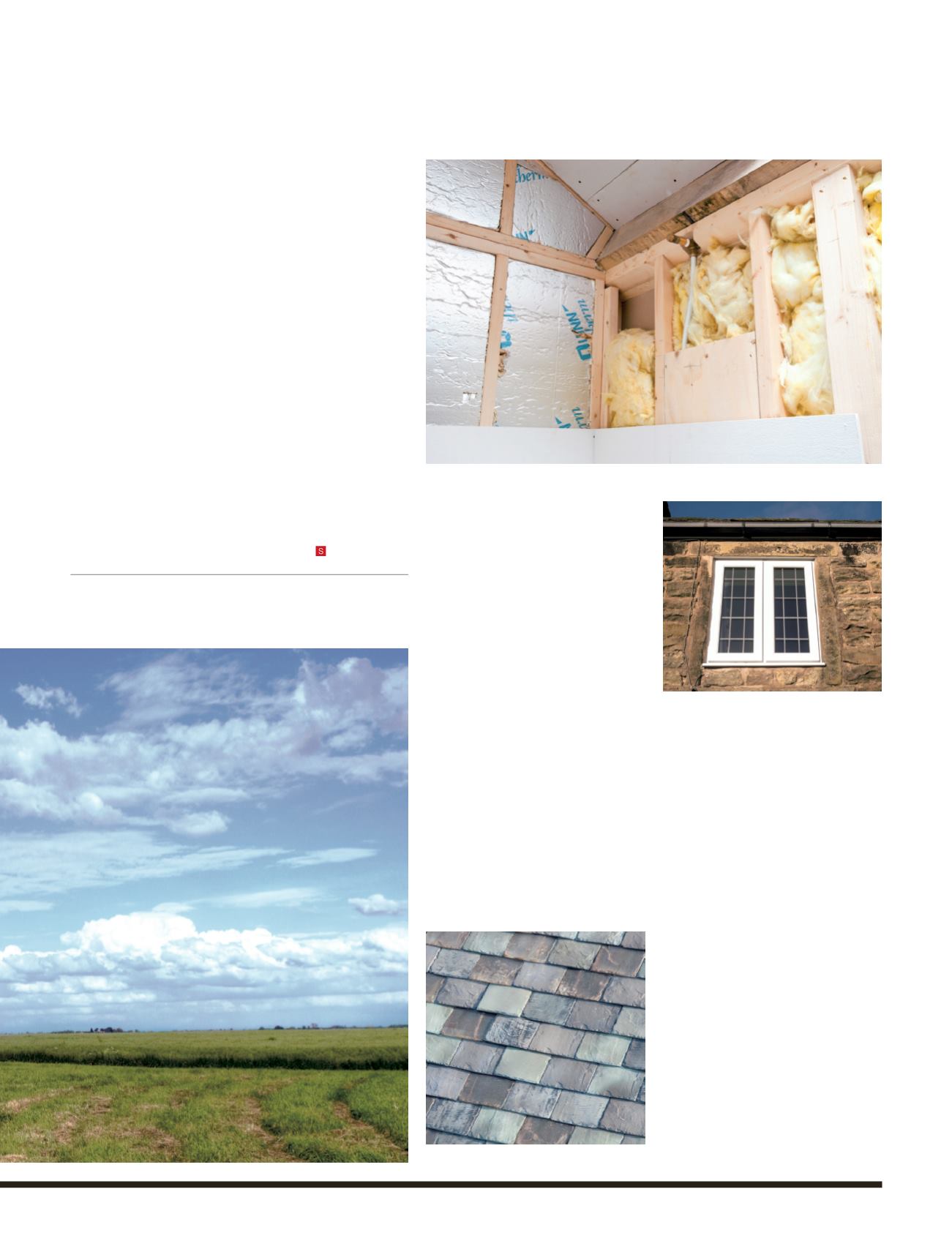
Wall insulation and double glazed windows increase a building’s energy efficiency
ASHLEY COOPER / ALAMY
SHUTTERSTOCK