


 19 / 36

spring / summer 2017 |
aspects of land
|
19
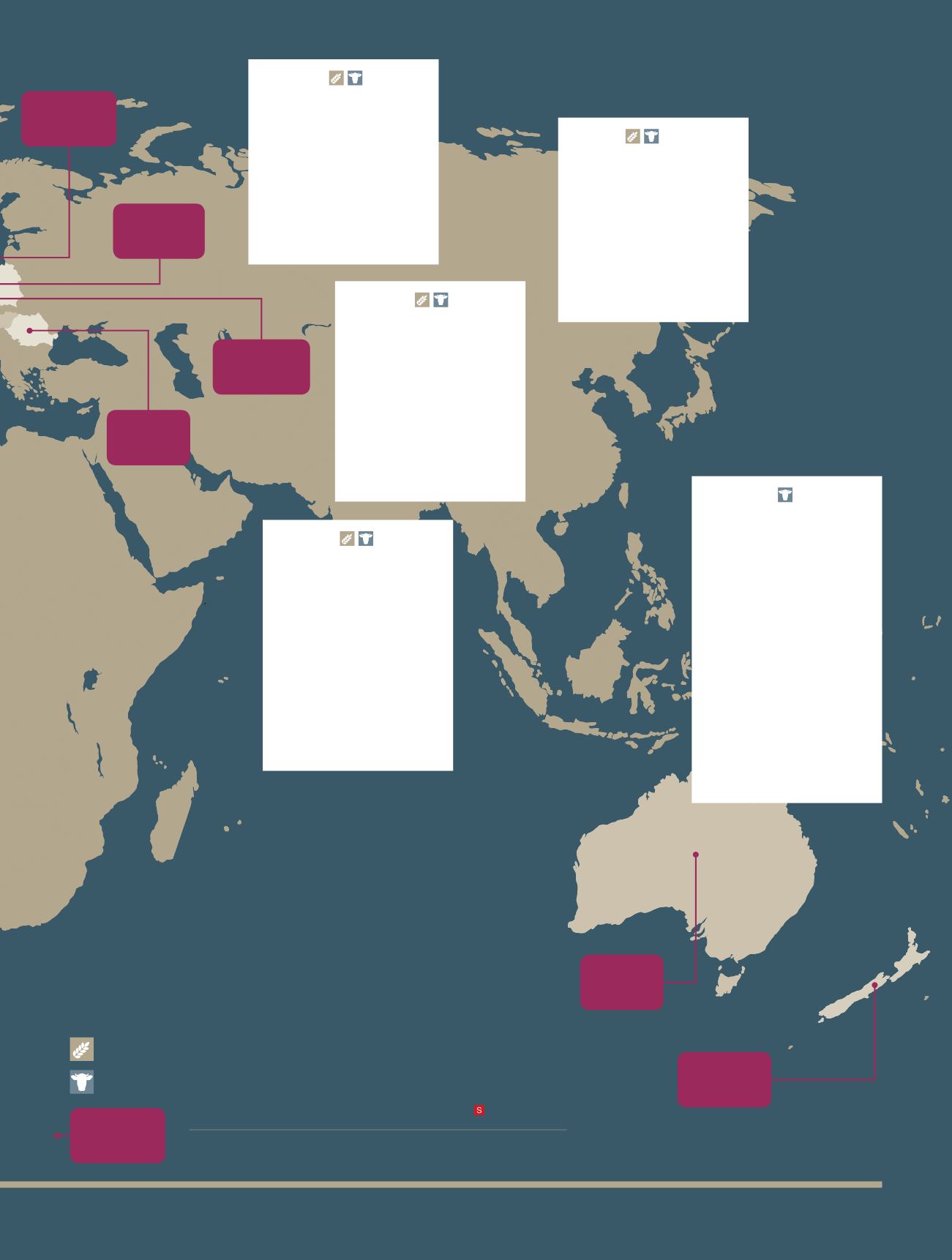
AUSTRALIA
Due to the geographical
scale of Australia, the varying
quality of land and the access
to infrastructure, farmland
values vary widely. The
east and west coasts are
key regions for arable crop
production, while large scale
cattle enterprises run across
the northern coasts. Over
the past two years, Australia
has been bucking the bearish
global trend, with cattle land
seeing a particular surge
in demand. Investors have
been buying large tracts of
land, but are less interested
in arable farms due to poor
commodity prices.
ROMANIA
In Romania, farmland markets
have been relatively static
over the past 12 months, as
its small plots make it difficult
for investors to obtain a large
farming portfolio, explains
Matthew. Units under 500
acres are commanding
€1,200-€2,000 per acre, with
those of 3,000 acres or more
around €3,600 per acre.
“Values really depend on the
title, size and proximity to
the Danube.”
DENMARK
In Denmark farmland prices
plateaued between 2008-9
and 2013 following a sharp
downward correction, but
since then they have begun
to strengthen. “There were
tough restrictions on farms
and labour, but these are
being lifted and it is a good
opportunity to invest,”
explains Matthew.
Germany
$35,330
Poland
$10,800
Romania
$6,800
Australia
$3,800
Average values
in US$ per
hectare (2015)
POLAND
Farmland values in Poland
have increased exponentially,
says Matthew. “In the past
decade prices have gone
from around €2,000 per acre
to €5,500 per acre.” Foreign
investment is restricted,
but in the past six months
investors have purchased
large areas through locally
domiciled companies.
GERMANY
Germany has recorded no
fall in the market and high
capital values mean that
income yields are at all-time
lows. “A large proportion of
East Germany was owned
and leased to farmers by
the government and over
the past 12 years there has
been a phased sell-off of this
into a market with pent-up
demand.”
Commercial farmland values, irrespective of location, are
principally affected by commodity prices and exchange rates,
as these are what drive demand. Over the past six months, global
farmland values have remained relatively flat as low commodity
prices have pressured farm incomes, says Matthew Sheldon of
Savills International Farmland. “The return on investment is
based on the income generated from the business. Fortunately,
the inertia from low commodity prices has slowed and we are
starting to see an improvement in prices received by farmers.”
As farmland values vary depending on the agricultural enterprise,
this map focuses on the industries that offer the greatest overall
return for investors. The value might relate to arable land, pasture
land or in some cases mixed farming operations.
n
Matthew Sheldon, London, 020 7016 3817,
msheldon@savills.comn
Ian Bailey, London, 020 7299 3099,
ibailey@savills.comWORLD VIEW
When it comes to looking for global
investments, how do farmland markets
around the world compare?
Denmark
$24,038
Arable/crop
farmland
Livestock
farmland
Investment types
New Zealand
$25,556
SOURCE: SAVILLS RESEARCH