


 17 / 36

spring / summer 2017 |
aspects of land
|
17
GILLY FLOWER IMAGES
ROB TARREN
CASE STUDY
ELMORE COURT,
GLOUCESTERSHIRE
Over 750 years of history
brings a certain pressure
for Anselm Guise of Elmore
Court, Gloucestershire. As
does the desire to pass
on the estate to the next
generation in the best
possible condition.
When Anselm inherited
Elmore Court in 2007, the
house was in a state and
the bills were higher than
the income from the estate
farms and cottages.
“My priorities were to
provide an income for my
family, to look after the
house and to look after the
wider estate,” says Anselm,
who has a background as
a DJ and festival organiser.
“I needed to find something
that was appropriate for
the estate, would generate
a decent income and be
something I would enjoy.”
The answer, he decided,
was to turn the house into
a wedding and events
venue. In 2012, he set
about renovating eight
bedrooms in the main
house and added a new
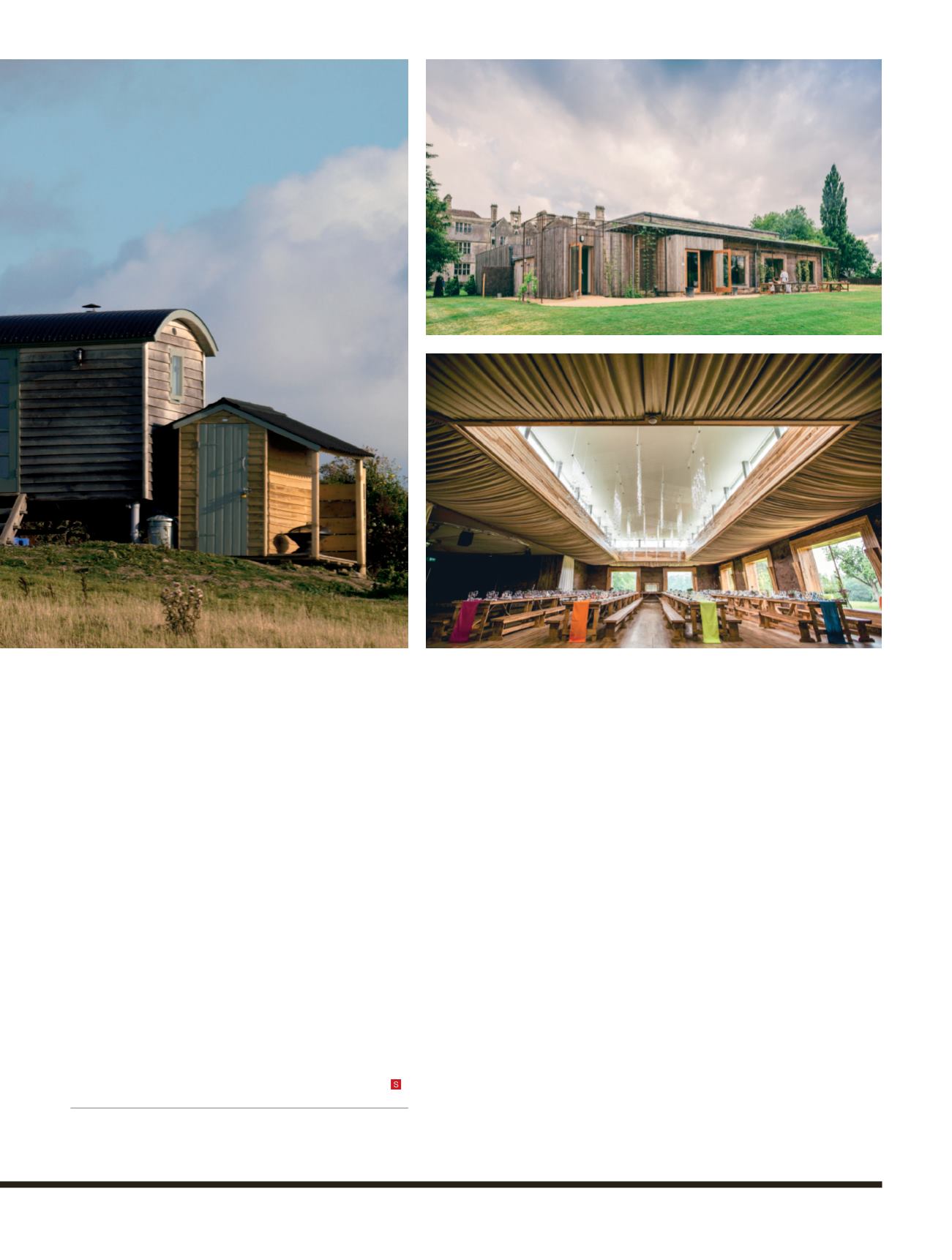
extension, the Gillyflower,
which he describes as
a “future-rustic” dinner
and dancing venue. It has
sound-proofed walls made
from rammed earth and
timber from the estate, a
high-end music and lighting
system and fabulous views
across the Gloucestershire
countryside.
This year he has
completed further
renovations to the main
house, so it now has 16
bedrooms, and he is close
to completing work on a
Coach House, which will
provide another two.
“The total cost of all
the renovations comes to
around £2.5 million. This
was financed with bank
lending and the sale of an
estate farm, which was a
pity but was done to secure
the future of the estate,”
says Anselm.
and other smaller properties. “This requires a long-term
vision, as returns take longer,” says Simon.
For every enterprise, research and planning is
fundamental to success.
“We’re currently working on a project in the south
of England for a café and playground and one of the
early stages was to complete a demographic analysis of
population levels within a 45-minute drive, as well as
disposable income levels for those living close
by.Wealso looked at what similar attractions existed locally,
what sort of footfall they generated and what that might
mean for the new project.This then sets the platform
for a business plan, which includes costs and financial
projections for the return on investment.”
Whatever the final choice, having a passion for the
enterprise sits at the heart of its future success.
“When enterprises fail, it’s often because the owner’s
heart was not really in it,” says Simon. “The next
generation of estate owners, however, have often had an
outside career before taking over the estate which gives
them wider business experience.They are often much
more comfortable with risk. I think the future will see a
more dynamic direction for estate leisure diversification.”
n
Simon Foster, Cheltenham, 01242 548 006,
sfoster@savills.comn
James Higham, Oxford,
01865 269 023,
jhigham@savills.com“WHERE ONCE
IT WAS ABOUT
OPENING THE
HOUSE AND
GARDENS UP
TO THE PUBLIC,
NOW OWNERS
ARE WORKING
HARDER TO DRAW
IN A WHOLE NEW
DEMOGRAPHIC
OF VISITORS”
ABOVE Elmore
Court’s perfect
party venue, the
Gillyflower, uses
building materials
from on the estate